My kids both have iPads now (and this post is not about how they're growing up "digital natives"—it's much more practical than that). Theirs are a few generations old, hand-me-downs from an aunt and a friend of ours. We have other friends who are already eager to get the latest models and pass on their old ones (and, to be honest, we're looking forward to getting these as hand-me-downs from them: thrice-outdated tablets).
All of which adds up to the increasing ubiquity of 7- and 10-inch screens in our lives. As a family of two adults, one reading child, and one pre-reading child, we now have two 10" tablets, one 7" tablet, and three e-ink readers. (I note here that of those, we've purchased only two of the e-readers—avid consumers will have even more.) And this erodes one of the biggest competitive advantages of paper books over e-books in an academic context: the computing power of a big desk.
When I was in graduate school, it was not uncommon for me to be working with a monograph or two open on my desk, a Greek text of Josephus or Philo, a translation of the same, a Septuagint, a Hebrew Bible, a commentary or two, a lexicon or two—and a computer on which I was taking notes or writing. Obviously, the first of these to go electronic were the lexica (flipping alphabetical pages is a nearly-unmitigated waste of time). Then—mostly when reading secondary literature—the ancient texts. Again, flipping for references, and checking text against text (Josephus's telling of a story, the Septuagint's rendering, and the Hebrew) are sped up by clickable text. But for delving deep into the texts themselves, the 15" screen of a laptop was too crowded.
It's well-known that bigger monitors increase productivity. Academics, however, already had bigger "monitors"—to wit, desktops, with two, or six, or ten books and journals and notepads and scraps of paper on them. You could (I did) physically print out a paper and cut it into sections, and rearrange those sections in order to see if the argument made more sense a different way, or if a section of the thing you were writing was weak on evidence.
The sheer number of screens in our daily lives, increasing by the year, makes ebooks vastly more practical for the way academics work, comparing and weighing sources (whether textual, visual, or artefactual). The next step, by the bye, will be apps to make multiple devices work together seemlessly.

Saturday, January 4, 2014

Friday, September 6, 2013
The Full and True Account of Thursday
It all started Wednesday night; Dr. Fledermaus and I were working late at Bat Jr's school (Back to School night) and we were exhausted when we left. "We'll just take the car to get the kids," we agreed, "and pick up the bikes in the morning." [SFX: Cue ominous music.]
Thursday morning was as hectic as mornings ever are with a three-year-old and a seven-year-old; I was even more confused than usual: "Get your shoes and go to the back door!" I was saying, when Dr. Fledermaus reminded me that we were going out the front door, and walking to school, picking up the bikes, and then carrying on as usual. [SFX: Cue even more ominous music.]
Arriving at school, what did we find? Dr. Fledermaus's bike, my bike trailer...and a heavy duty chain and cut mini-U-lock on the ground.

The only response possible was rational. I numbly went through the list. Call police, file a report. Tell everyone: facebook, twitter, the bike forums, the stolen bike database. I thanked God, and my 2011 self for having registered the bike with the Chicago Police Department. The world was on notice. By the time I'd walked halfway to work, a friend was meeting me with a loaner bike.
Lunchtime. Enough mooning about the crappy summer. Three dead pets and a stolen bike--it was time to take fate into my own hands.You make your own luck. (Hah. So I told myself.) "Everyone knows," my internal monologue went on, "that stolen bikes show up at Swap-O-Rama."
 The flea market. I don't know how many acres, but it's two and a half city blocks of stolen, grey-market, and otherwise dubiously capitalistic tools, stereo equipment, DVDs, socks, shampoo, dried beans, and, yes, bikes.... I walked the
full grounds, singleminded in purpose: checking out every plausible bike..could it have been repainted in a morning? New decals put on? bar tape changed? Nothing. Kids bikes, BMX, road bikes, mountain bikes, single speeds. There was a yellow van I went by twice; it had two nice rides on the roof, but its open back doors were facing a concrete wall--could it be inside? A pickup truck pulled out, having closed up shop for the day, with at least fifteen close-packed bicycles in the back, held down (more or less) with clothesline. None looked like mine. I thought.
The flea market. I don't know how many acres, but it's two and a half city blocks of stolen, grey-market, and otherwise dubiously capitalistic tools, stereo equipment, DVDs, socks, shampoo, dried beans, and, yes, bikes.... I walked the
full grounds, singleminded in purpose: checking out every plausible bike..could it have been repainted in a morning? New decals put on? bar tape changed? Nothing. Kids bikes, BMX, road bikes, mountain bikes, single speeds. There was a yellow van I went by twice; it had two nice rides on the roof, but its open back doors were facing a concrete wall--could it be inside? A pickup truck pulled out, having closed up shop for the day, with at least fifteen close-packed bicycles in the back, held down (more or less) with clothesline. None looked like mine. I thought.
Eventually, I texted my wife to say, "Saw a bunch of stolen bikes, but not mine." I was taking a last mosey around, contemplating how many visits it would be worth making, but mostly looking for friends' recently stolen bikes, when I spied, past a pile of tools, toys, and electronics accessories, a glint of silver and white in the back of a guy's dirty red van: There it was! I'd recognize that 1" head tube and silver brake lever from...well, 45 feet. I walked up and said, "That's my bike in your van. I'm going to need it back." He immediately started talking about "the guy who sold it to him" but I didn't listen. There was one thing I was there for, and that was in front of me. It was in my hands. I took it and got the hell out of there, never looked back.
 When I got back to the car, I took a longer look. She'd been stripped of her pump, saddlebag, trailer hitch, SPD pedals, any reasonable dignity of handlebar angle, and one bottle cage, but she was mine again.
Thursday morning was as hectic as mornings ever are with a three-year-old and a seven-year-old; I was even more confused than usual: "Get your shoes and go to the back door!" I was saying, when Dr. Fledermaus reminded me that we were going out the front door, and walking to school, picking up the bikes, and then carrying on as usual. [SFX: Cue even more ominous music.]
Arriving at school, what did we find? Dr. Fledermaus's bike, my bike trailer...and a heavy duty chain and cut mini-U-lock on the ground.

Lunchtime. Enough mooning about the crappy summer. Three dead pets and a stolen bike--it was time to take fate into my own hands.You make your own luck. (Hah. So I told myself.) "Everyone knows," my internal monologue went on, "that stolen bikes show up at Swap-O-Rama."
Eventually, I texted my wife to say, "Saw a bunch of stolen bikes, but not mine." I was taking a last mosey around, contemplating how many visits it would be worth making, but mostly looking for friends' recently stolen bikes, when I spied, past a pile of tools, toys, and electronics accessories, a glint of silver and white in the back of a guy's dirty red van: There it was! I'd recognize that 1" head tube and silver brake lever from...well, 45 feet. I walked up and said, "That's my bike in your van. I'm going to need it back." He immediately started talking about "the guy who sold it to him" but I didn't listen. There was one thing I was there for, and that was in front of me. It was in my hands. I took it and got the hell out of there, never looked back.
Monday, August 26, 2013
The past is unevenly distributed, too.
William Gibson famously said ("many times"), "The future is already here; it's just not very evenly distributed." What if we turn this around, and think about the past? "The past is still here; it's just not very evenly distributed."
Traveling in Europe (as an American), it's easy to be jealous of the past, the overwhelming physicality of cathedrals and castles, ruins and walls, stone roads with thousand-year-old ruts. We need a Faulkner to remind us that we are saturated in the past, too (and a Woody Allen to remind us that Faulkner reminded us). Our past is in the stories we tell, and mistake, and repeat, and tell falsely, and misattribute, and misrepresent.
The great error, of course, is thinking that the past is gone. But the other (greater?) error is to have a crappy copy of the past. A cheap knockoff past, that looks, from one angle, and in a dim light, like the past. But it's beyond fake; it's a toy, a cardboard cutout that could never have worked.
 Or worse, it's a working model, like a model railroad: it chugs along, clean and on-schedule and under control in its little world; but again, the past isn't that utopian memory. It's got an infinite number of moving parts, it doesn't run on some magical plug in outside the universe; it's coal fired and the coal has to be mined by dirty men and shoveled with dirty shovels and Jesus everything is dirty and your lungs are eventually dirty and you die.
 But refusing to be bound by the past is one of the freedoms of America. And freedoms are never free ("Thank a serviceman" the bumper sticker goes on). Belle da Costa Greene passed for white, broke free of the centuries of being Black in America; she spent (incredibly well) vast sums of money collecting the best of the past for J.Pierpont Morgan, and never spoke to her father, Harvard-educated lawyer and diplomat Richard Greener.
Richard Greener lived at 5237 S. Ellis, a few blocks from where I sit now. The apartment building he lived in was, evidently, home also to Ida Platt, admitted to the Illinois bar in 1894 as the first Black female lawyer in the state. She was making a living in 1910 passing as a white woman. In 1920, while Platt was still practicing, Violette Anderson became the (second!) first Black female lawyer in Illinois. While Richard Greener watched, Ida Platt gave up her place in history, for flourishing in the present, just as his daughter had. The past came and went and folded back over itself.
And the apartment building is gone, now, replaced by townhouses. The past cropped up a few miles away, in Englewood, though--unevenly distributed.
Traveling in Europe (as an American), it's easy to be jealous of the past, the overwhelming physicality of cathedrals and castles, ruins and walls, stone roads with thousand-year-old ruts. We need a Faulkner to remind us that we are saturated in the past, too (and a Woody Allen to remind us that Faulkner reminded us). Our past is in the stories we tell, and mistake, and repeat, and tell falsely, and misattribute, and misrepresent.
The great error, of course, is thinking that the past is gone. But the other (greater?) error is to have a crappy copy of the past. A cheap knockoff past, that looks, from one angle, and in a dim light, like the past. But it's beyond fake; it's a toy, a cardboard cutout that could never have worked.
 Or worse, it's a working model, like a model railroad: it chugs along, clean and on-schedule and under control in its little world; but again, the past isn't that utopian memory. It's got an infinite number of moving parts, it doesn't run on some magical plug in outside the universe; it's coal fired and the coal has to be mined by dirty men and shoveled with dirty shovels and Jesus everything is dirty and your lungs are eventually dirty and you die.
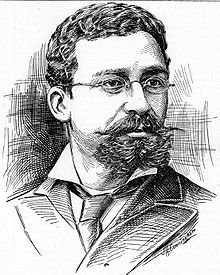 But refusing to be bound by the past is one of the freedoms of America. And freedoms are never free ("Thank a serviceman" the bumper sticker goes on). Belle da Costa Greene passed for white, broke free of the centuries of being Black in America; she spent (incredibly well) vast sums of money collecting the best of the past for J.Pierpont Morgan, and never spoke to her father, Harvard-educated lawyer and diplomat Richard Greener.
Richard Greener lived at 5237 S. Ellis, a few blocks from where I sit now. The apartment building he lived in was, evidently, home also to Ida Platt, admitted to the Illinois bar in 1894 as the first Black female lawyer in the state. She was making a living in 1910 passing as a white woman. In 1920, while Platt was still practicing, Violette Anderson became the (second!) first Black female lawyer in Illinois. While Richard Greener watched, Ida Platt gave up her place in history, for flourishing in the present, just as his daughter had. The past came and went and folded back over itself.
And the apartment building is gone, now, replaced by townhouses. The past cropped up a few miles away, in Englewood, though--unevenly distributed.
Friday, August 23, 2013
A Tale of Two—No, Three—Libraries
Last Tuesday I found myself in New York City, with a few hours in the afternoon to spend. I’d arranged to meet my Vergil, Jon Bruner, at the New York Public Library. Awaiting Jon on the steps, I felt I’d stepped into a W.H. Whyte map:

The Library is, of course, an astounding achievement, not just a monument to the democratization of knowledge, but an ongoing project of the same. The openness of the reading rooms and the easy access to the collections are obvious. And my god, is it astoundingly beautiful.

But let me back up a week and mention the last time I came across the NYPL. A few years ago, it would have been in the course of acquiring images from their collection; this time it was much more exciting.* The NYPL map vectorizer is a really cool tool to extract data from paper maps and encode it as geographical information that can be layered with hundreds of other layers and kinds of information.
What’s more, it’s a totally open-source project on GitHub, so you can tweak it to your purposes or contribute to improving the original project. This is democratization of research at its highest. Given the range of what NYPL has put on GitHub, they are taking ‘public’ very seriously.
Changing gears
The next stop after the NYPL was the (Morgan Library and Museum)[http://www.themorgan.org/home.asp]. An utterly flabbergasting place, it was J.P. Morgan’s personal study and library, since converted into a research library and museum, with an appendix by Renzo Piano. The presence of so many historically mindblowing and phenomenally valuable things (three Gutenberg Bibles! manuscripts from Percy Bysse Shelley to Blowin’ in the Wind! I could go on, but I’d break down in tears) in such a setting was almost too much.
(As an aside: if you go, be sure to ask the security guards—they are very well-informed—about the staircase. I won’t spoil the surprise.)
(As an aside: if you go, be sure to ask the security guards—they are very well-informed—about the staircase. I won’t spoil the surprise.)
It’s good to be the richest man in America (and to have Belle da Costa Greene managing your collection and acquisitions).
Between the NYPL and the Morgan, we have two wonderful and very different libraries, mappable onto (let’s be honest—ancient Athenian) notions of democracy and oligarchy. But they called to mind a third library, George Washington’s library at Mount Vernon.
Washington was, according to the Atlantic, America’s wealthiest president. Yet his library had a mere 1,300 volumes (1,287 + maps, charts, etc, to be specific). Mine has about 700 (probably a few more; I haven’t updated my catalogue in a systematic way in a while). Mount Vernon is about 7,000 square feet; my house is about 3,200. You see where I’m going with this: One of the wealthiest men in America, and our first president, had a standard of living (hey, can you think of a better measure than library and living space?) broadly comparable with mine; the multiplication and spread of wealth and knowledge brought about by the Industrial Revolution is embodied in these three buildings.
*Your excitement level may vary.
Tuesday, July 23, 2013
Some thoughts on the AHA's statement on Open Access
This is just a brief note on the AHA Statement on Open Access (with a
special hat-tip to Jason M. Kelly’s insightful point-by-point response).
Though I’m writing from a standpoint within academic
publishing, I won’t comment on whether we deprecate works published open-access
as dissertations (for various reasons I'm sure you can imagine). I want to pull the focus back a bit and point out a few
obvious things. (Hey, somebody has to!) The AHA’s statement is quite pragmatic in
working within the status quo: publishers have a lot of power, especially over
young academics’ careers.
However, publishers have that power because departments
(and, perhaps more crucially, university administrations above them) have given
it to them: hiring and tenure are not, cannot be done in today’s university, on
the basis of a departmental decision. Rather, there needs to be outside
evidence, measurable evidence!—checklists and scores and quantifiably lawyer-proof
mountains of Why we hired X and not Y. This is a fact of life, and the AHA is
wise not to take on the ABA (and that ain’t the booksellers’ association here).
But the AHA could have done more. Let me quote one point
from the AHA and Kelly’s counterpoint.
AHA: By endorsing a policy that
allows embargos, the AHA seeks to balance two central though at times competing
ideals in our profession–on the one hand, the full and timely dissemination of
new historical knowledge; and, on the other, the unfettered ability of young
historians to revise their dissertations and obtain a publishing contract from
a press.
Kelly: It is important to protect
the interests of early career historians. But, this statement seems to understand their interests narrowly. What
kind of academic community should we help craft with them? I would
suggest that we help craft a community of openness and collaboration — one
that embraces technologies that are likely to expand our impact and reach wider
audiences. This may mean remaking the conventions of the profession and
likely requires that we abandon ad hoc attempts to protect the status quo.
This will likely mean confronting the habitus of
our profession and disrupting the institutions that we have been working in for
over 100 years.
(my emphasis)
The “ability of young historians to revise their
dissertations and obtain a publishing contract from a press” is not by any possible stretch of the imagination an “ideal
in our profession”—it’s a means, a practical stepping point to keep future
scholars in business. But far more importantly, academic publishing is exactly
the business of “full and timely dissemination of new historical knowledge.”
And here’s where the AHA erred. They should have called out
both publishers and their own membership for slowing down the timely publication
of new scholarship. “Confronting the habitus
of our profession and disrupting the institutions” is another way of
saying, “We need to raise our game to a new level, and fast, or we're going to be looking for a new game."
Young scholars--don't just "obtain a publishing contract," make that diss into a manuscript.
Senior scholars--turn around your goddamn manuscript reports.
Publishers--you know how complicated this is and the gazillion things that can derail or slow publication.
Everyone: Do it better.
Sunday, April 14, 2013
Twelve movies about food
To watch over the coming months. I haven't seen all of them, additions or recommendations welcome.
- Big Night
- Jiro Dreams of Sushi
- Scent of Green Papaya
- Like Water for Chocolate
- Babette's Feast
- Moonstruck
- Tampopo
- Mostly Martha
- Julie and Julia
- Delicatessen
- Ratatouille
- The Cook, the Thief, His Wife, and Her Lover
Wednesday, April 3, 2013
Accidental Haiku
The New York Times has gone and created a haiku-generator—no, it's a haiku-discoverer, pulling haiku-meter quotes from NYT articles. It's based ultimately on an open-source Python program, written by Jonathan Feinberg. I grabbed the code and tackled my sent email from the past few months. Here are the (better among the) results:
I may ask for house
keys later but we'll see how
the day is going.
The other issue
is one of length -- and this could
be a bit tricky.
Save your work often,
you know how reliable
your computer is.
I think m4m
is a little too oblique
for a subtitle.
Hope you celebrate
with champagne and foie gras, or
some facsimile.
And, as expected,
the Terman and Kinsey books
are totally cool.
I should start to look
at those if I'm sending it all
in less than two weeks.
They are not stylists,
but their writing is clearly
comprehensible.
Do you want to hang
out with daddy more because
he is not as brown?
Then they went and moved
the whole thing to Las Vegas,
ruining our plan.
Just took a skim-look.
I think this is a good plan.
But not a good goal.
This is, however,
putting some parts of the cart
before the horses.
She has published two
dozen journal articles
in addition. Bored?
Yup, that's it! The back-door
one has been clicking away
since February.
Or is discretion
dictating another day
in prone position?
Is there anything
additional coming, or should
I just remove that?
Ponder what you might
do with a few extra hands
for a long work day.
It is hard to lift
out the title embedded
in the lighter text.
As a grad student,
you're managing one big project,
the dissertation.
So I got involved
in the 'keeping the author
happy' end of things.
You can tell her, too,
that we're processing the second
half of her advance.
Subscribe to:
Posts (Atom)